Utah Becomes US Measles Epicenter as National Count Exceeds 1,700
Utah's measles outbreak has surpassed 600 cases, overtaking South Carolina as the most active in the US, with the national total exceeding 1,714 infections.
Overview
The United States is experiencing its most significant measles resurgence in years, with the national case count surpassing 1,700 confirmed infections as of mid-April 2026 — a threshold that would have been unthinkable just a few years ago for a disease declared eliminated in this country in 2000. The outbreak is no longer broadly distributed; it has a clear geographic center of gravity. Utah has overtaken South Carolina as the most active outbreak state in the nation, with local case counts exceeding 600 infections and the trajectory of transmission showing no signs of plateauing. Public health officials are navigating a resurgence driven primarily by vaccination gaps in specific communities, compounding a national pattern of measles importations that gained a foothold where herd immunity has eroded.
Current Situation
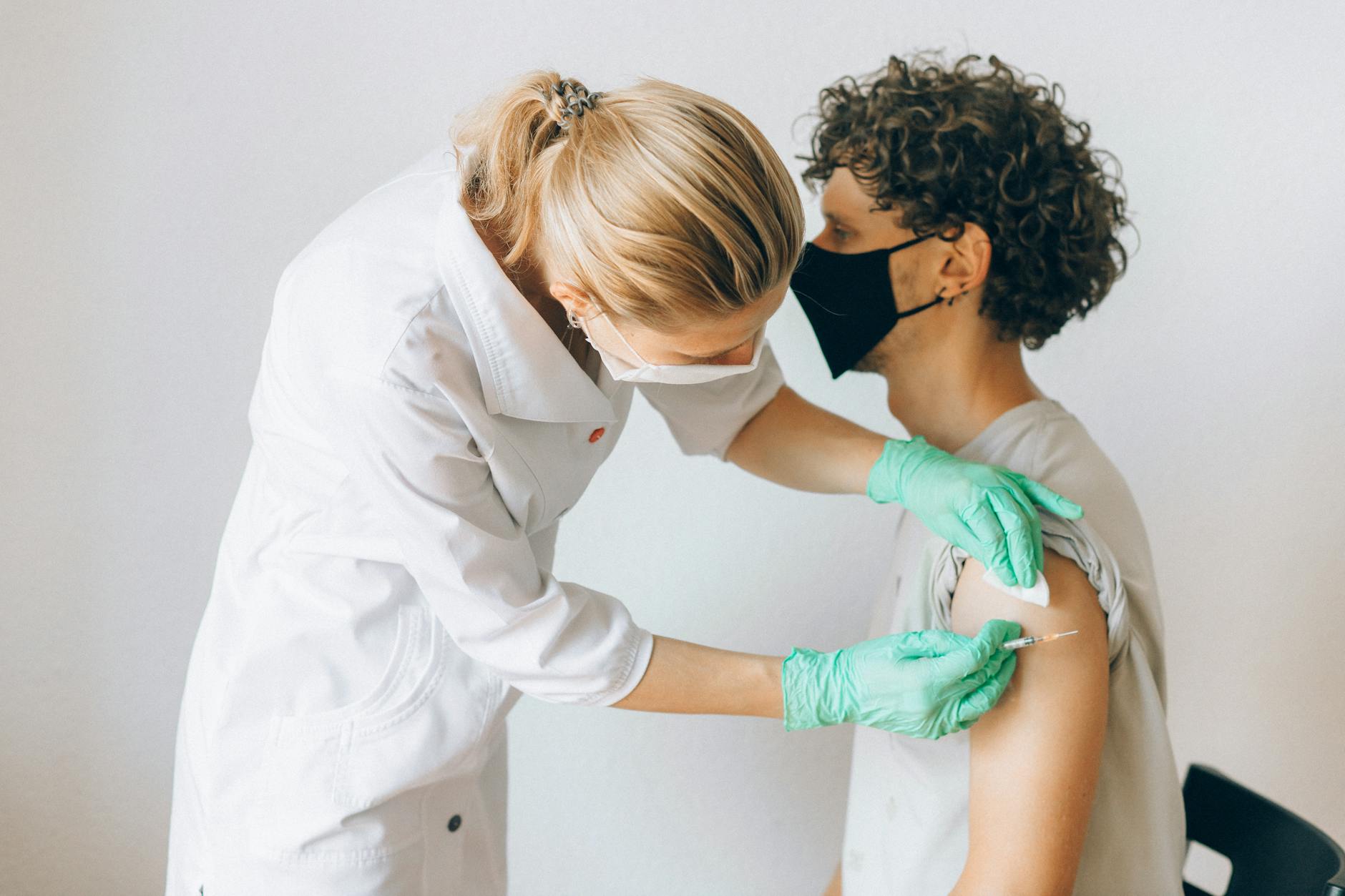 Image: Pexels/Nataliya Vaitkevich
As of the week ending April 10, the Centers for Disease Control and Prevention (CDC) and state health departments collectively reported 1,714 confirmed measles cases across the United States, according to data tracked by the Center for Infectious Disease Research and Policy (CIDRAP). That weekly update alone added 43 new infections to the national tally, indicating that transmission remains active even as some previously affected states have quieted.
The scale of Utah’s outbreak is particularly striking when viewed against recent baselines. According to CIDRAP reporting from early April, Utah recorded 142 new infections in just three weeks — a figure that compares to 197 total cases for all of calendar year 2025. In other words, the state surpassed roughly 72 percent of its prior full-year total in less than a month. During a five-day window in early April, Utah officials logged 24 new confirmed cases, a transmission rate consistent with sustained community spread rather than isolated chains of importation.
South Carolina, which had been among the most active outbreak states in earlier phases of this resurgence, reported no new measles activity in the most recent surveillance period, according to CIDRAP. That development offers some encouragement about containment capacity but does not diminish the national picture: Utah’s outbreak is now large enough and fast-moving enough to keep the US well above any threshold associated with controlled, sporadic transmission.
Affected Regions
Utah’s position as the current epicenter reflects a convergence of factors common to measles resurgences globally: pockets of low vaccination coverage, dense social networks within under-immunized communities, and the extraordinary transmissibility of the measles virus itself. While Utah has dominated recent case counts — accounting for 73 of 96 new US cases reported in one early-April update, per CIDRAP — the broader national picture involves multiple states.
South Carolina’s apparent stabilization is notable because it had sustained significant case counts in earlier months. Whether that trend holds will depend on the durability of local outbreak response efforts, including targeted vaccination campaigns and case isolation protocols. Other states have reported smaller clusters throughout 2026, reflecting measles’s capacity to exploit any gap in community immunity, particularly in school-age populations and tightly connected religious or social communities where vaccination rates have historically lagged.
The geographic concentration of the current surge in Utah does not mean the risk is purely regional. Measles spreads through airborne transmission and remains infectious for up to two hours in a room after an infected person has left. Travel between states — routine for most Americans — means that any active cluster carries export potential to communities elsewhere that may share similar vaccination profiles.
Risk Assessment
 Image: Pexels/Pavel Danilyuk
Measles is among the most contagious pathogens known to science, with a basic reproduction number (R₀) estimated between 12 and 18 in fully susceptible populations. That means a single unvaccinated infectious individual can, under the right conditions, infect more than a dozen others. Maintaining herd immunity requires vaccination coverage of approximately 95 percent — a threshold that, according to public health experts cited by CIDRAP, has been compromised in multiple US communities in recent years.
The populations most at risk in the current outbreak are predictable: infants too young to have received their first MMR (measles, mumps, rubella) dose, unvaccinated individuals of any age, immunocompromised persons who cannot mount an adequate response even after vaccination, and pregnant women, for whom measles can cause severe complications including premature birth.
Individuals who are unvaccinated or unsure of their vaccination status and who have been in Utah or other active outbreak areas should contact a healthcare provider immediately to assess their MMR vaccine status — do not go directly to an emergency department or clinic without calling ahead, as this could expose vulnerable patients.Clinicians and public health advisors tracked by CIDRAP have emphasized an important differential diagnosis challenge: early measles symptoms — fever, cough, runny nose, and red eyes — closely mimic influenza. The distinctive Koplik’s spots (small white lesions inside the mouth) and the characteristic spreading rash typically appear later, after a patient may already have exposed others. This overlap increases the window during which an infected person may unknowingly visit healthcare facilities, schools, or public spaces.
Prevention & Response
The MMR vaccine remains the cornerstone of measles prevention and is highly effective: two doses confer approximately 97 percent protection against infection. The US childhood immunization schedule recommends the first MMR dose at 12–15 months and a second dose at 4–6 years. Adults born after 1957 who have not received two documented MMR doses, or who lack serologic evidence of immunity, should be vaccinated.
State health authorities in Utah have been coordinating with the CDC on outbreak response, including enhanced surveillance, contact tracing for confirmed cases, and targeted vaccination outreach to under-immunized communities. Public health messaging has focused on encouraging unvaccinated individuals to seek vaccination promptly and on advising symptomatic people to call ahead before seeking care — a critical step in preventing healthcare-associated transmission.
CIDRAP has also highlighted the importance of public literacy about symptom recognition. As measles becomes more common in the US than it has been in decades, clinicians who trained after elimination-era guidelines may have limited experience distinguishing early measles from other febrile illnesses. The agency recommends that individuals experiencing fever with cough, coryza (runny nose), and conjunctivitis — especially in a context of known measles exposure or travel to an active outbreak area — should proactively inform healthcare providers of their vaccination status and potential exposure before presenting in person.
The broader policy context matters here. The US measles resurgence in 2026 is not primarily a failure of the vaccine — it is a failure of vaccine coverage. The MMR vaccine works. The challenge is logistical, social, and political: reaching communities where vaccination rates have declined due to hesitancy, access barriers, or misinformation. Without sustained investment in routine immunization infrastructure and targeted outreach to under-vaccinated populations, the conditions that allowed Utah’s outbreak to explode from dozens to hundreds of cases in weeks will persist — and export potential to other states will remain.
Sources
- CIDRAP — Utah measles outbreak tops 600 cases, now most active in the US (April 15, 2026)
- CIDRAP — US measles total surpasses 1,700 cases (April 10, 2026)
- CIDRAP — South Carolina sees no new measles activity as Utah becomes epicenter of US outbreaks (April 8, 2026)
- CIDRAP — US nears 1,700 measles cases, with 73 new infections in Utah (April 3, 2026)
- CIDRAP — Are your symptoms caused by the flu or measles? (April 10, 2026)