US-Iran Tensions Put the World's Oil Jugular at Risk
A potential US naval blockade of the Strait of Hormuz could trigger an oil shock, drag China into conflict, and reshape global energy markets overnight.
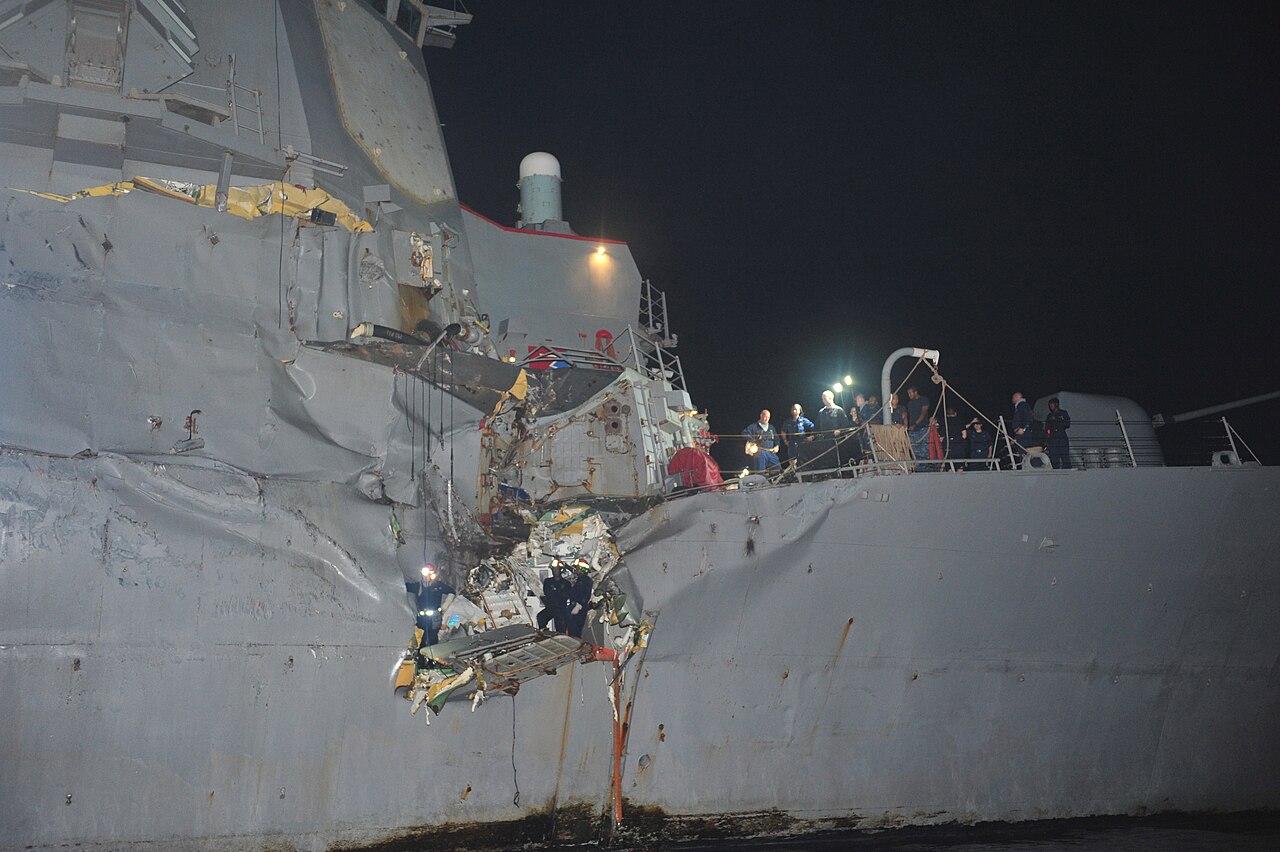
There is a narrow band of water — roughly 21 miles wide at its tightest point — that separates the Persian Gulf from the open ocean. Every day, tankers carrying roughly one-fifth of the world’s traded oil squeeze through it. If that passage closes, the effects ripple from gas stations in Ohio to factory floors in Guangzhou within weeks. Right now, according to analysts tracking US-Iran developments reported by War Monitor, that chokepoint is at the center of one of the most dangerous standoffs in years.
What Happened
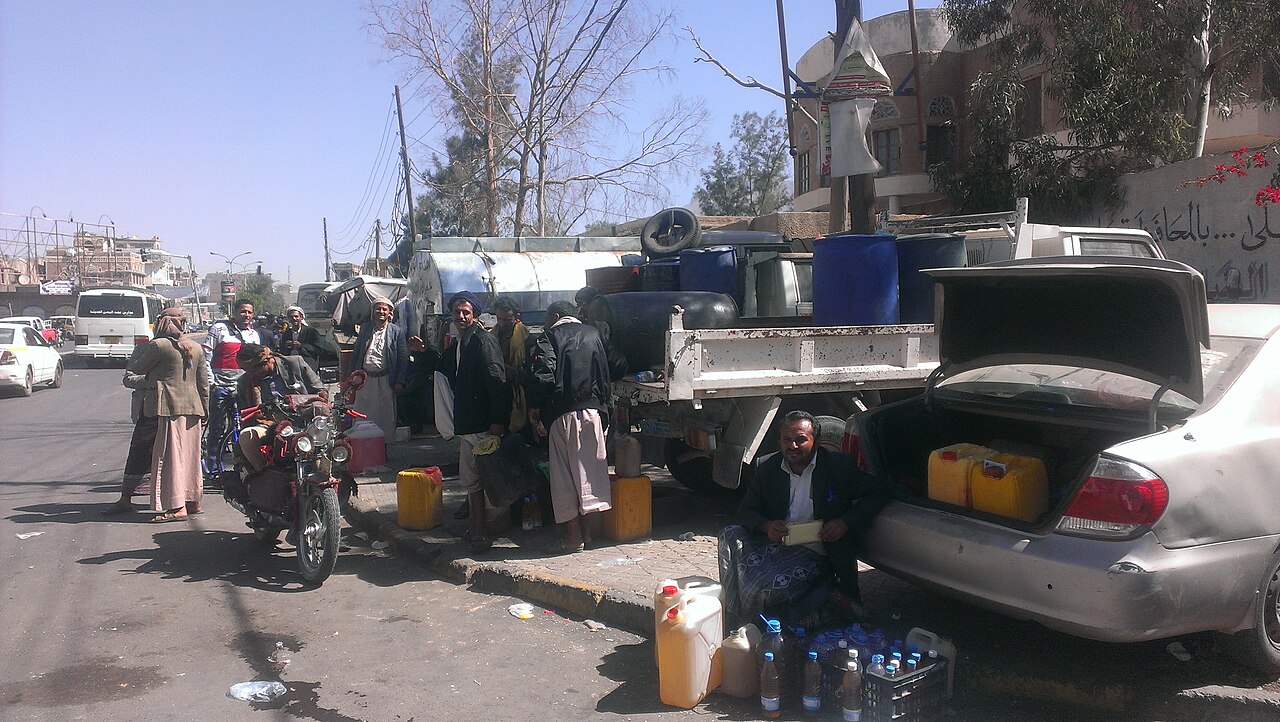 Image: Wikimedia Commons
Tensions between Washington and Tehran have escalated sharply, with analysts now openly discussing the possibility of a US naval operation to blockade the Strait of Hormuz — the narrow waterway connecting the Persian Gulf to the Gulf of Oman. War Monitor flagged the development at severity level 8 out of 10, placing it among the most serious active flashpoints currently being tracked.
The precise trigger remains contested, as is typical in early-stage escalation cycles. What is clear, according to War Monitor’s assessment, is that the scenario involves the US Navy potentially halting tanker traffic through the strait — whether as a coercive pressure tactic against Iran or as a response to Iranian provocations that have not yet been fully confirmed by Western wire services including Reuters or the BBC.
Iran has long threatened to close the Strait of Hormuz in response to Western military pressure — a threat it has periodically rehearsed through naval drills. The US has historically countered that it would keep the strait open by force if necessary, a commitment underpinned by the Fifth Fleet, headquartered in Bahrain. The current scenario, however, appears to invert the dynamic: it is Washington, not Tehran, being discussed as the potential blockading party — a significant and largely unprecedented framing.
Why It Matters
The Strait of Hormuz is not just strategically important — it is, by any honest accounting, the single most consequential maritime chokepoint on Earth from an energy perspective. According to the US Energy Information Administration, approximately 21 million barrels of oil per day transited the strait in recent years, representing about 21% of total global petroleum liquids consumption. There is no realistic alternative route that could absorb that volume. The East-West Pipeline across Saudi Arabia can move perhaps 5 million barrels per day at maximum. The rest would simply disappear from markets.
A sustained blockade, even a partial one, would almost certainly trigger the worst oil supply shock since the 1973 Arab oil embargo.Analysts at institutions including the Council on Foreign Relations have modeled Hormuz closure scenarios and consistently found that oil prices could spike past $200 per barrel within weeks of a serious disruption. At that price, the knock-on effects are severe: aviation fuel costs cripple airlines, petrochemical supply chains seize up, and inflation — already a persistent problem in most advanced economies — re-accelerates sharply. Emerging market economies, which import oil in dollars and carry dollar-denominated debt, would face the sharpest pain.
For Iran itself, the calculus is complicated. A blockade — if US-imposed — would be designed to strangle Iranian oil export revenues, which remain the primary hard-currency lifeline for the government in Tehran. Iran has diversified its customer base over years of sanctions, routing exports through intermediaries and selling heavily to China at steep discounts. But no amount of supply chain creativity survives a physical naval interdiction of its export corridors.
The Bigger Picture
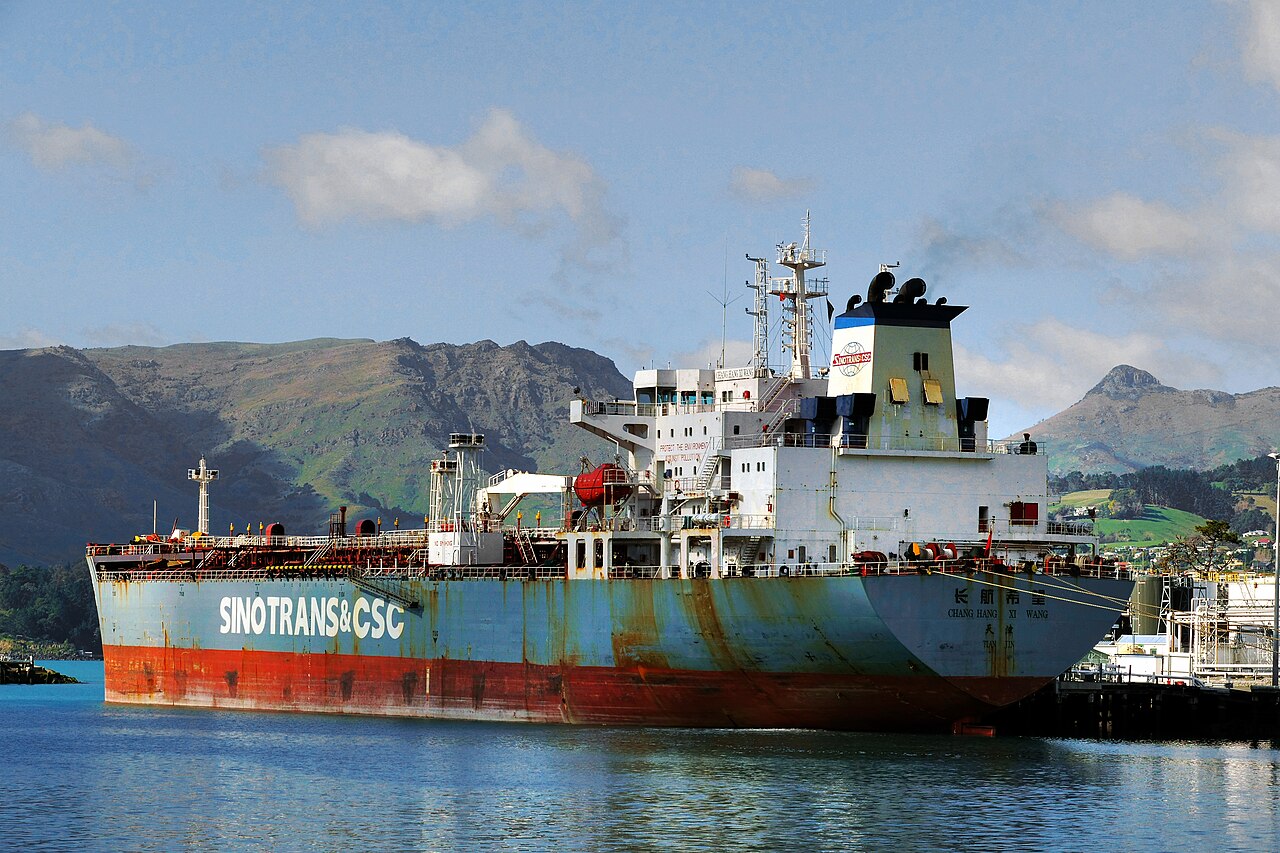 Image: Wikimedia Commons
The most explosive variable in this scenario is China. Beijing receives a significant share of its crude oil imports from the Gulf, with estimates from energy analysts suggesting Persian Gulf sources account for roughly 40-50% of Chinese crude imports. A US-imposed blockade would therefore function, in practical terms, as an economic attack on Chinese industry as much as on Iran.
China’s response options range from diplomatic protest — the path of least resistance — to active naval escort of Chinese-flagged or Chinese-chartered tankers through the strait. Beijing has invested heavily in building out its blue-water naval capacity and has publicly stated its intention to protect what it considers legitimate commercial interests. Whether that commitment extends to a direct confrontation with the US Navy in the Persian Gulf is unknowable in advance, but the People’s Liberation Army Navy has been exercising precisely this kind of power projection scenario in recent years.
This creates a dangerous trilemma for Washington. Imposing a blockade that stops Iranian oil exports without triggering Chinese escalation requires either Beijing’s quiet acquiescence — which cannot be assumed — or a degree of surgical selectivity in enforcement that is very difficult to achieve in practice. Chinese tankers don’t conveniently announce their cargo origin.
Beyond China, India, Japan, and South Korea are also major consumers of Gulf crude. All three are US allies or partners to varying degrees, and all three would be severely damaged by a prolonged strait closure. The diplomatic cost of imposing that damage on friendly economies would be substantial, and these governments would face intense domestic pressure to publicly oppose a US blockade — a fracturing of the Western-aligned coalition that Beijing would eagerly exploit.
There is also the question of Iranian countermoves. Tehran has historically responded to pressure with asymmetric tactics: attacks on oil infrastructure in the Gulf, mining of maritime approaches, proxy strikes via Hezbollah, the Houthis, or Iraqi militia groups. A US blockade would not leave Iran passive. The Gulf states — particularly Saudi Arabia and the UAE, whose oil export terminals lie within easy striking distance of Iranian missiles and drones — would face immediate physical risk.
What to Watch
Several indicators will signal whether this escalation is moving toward kinetic action or remains in the coercive signaling phase:
US carrier group positioning is the most reliable leading indicator. The presence of two carrier strike groups in the Gulf or Arabian Sea simultaneously has historically preceded major US military action in the region. Single-carrier presence is normal; doubled presence is not.
Watch for emergency OPEC+ consultations. If Saudi Arabia and the UAE begin accelerating drawdowns from strategic reserves or calling extraordinary ministerial meetings, it suggests Gulf producers believe disruption is imminent and are trying to pre-position.
Chinese diplomatic statements will be unusually informative. Beijing typically speaks in careful generalities, but language specifically invoking freedom of navigation rights in the Persian Gulf — a body of water China has not historically emphasized — would signal that it is preparing a direct response posture rather than a sideline protest.
Finally, monitor Iran’s domestic signaling. Supreme Leader Khamenei’s public statements, the tone of IRGC communiques, and whether Iran begins calling up reserve naval forces will indicate how seriously Tehran is taking the threat and whether it is preparing offensive options of its own.
The Strait of Hormuz has been the subject of crisis scenarios for decades. What makes this moment different, according to early assessments from War Monitor, is the apparent inversion of the traditional threat dynamic and the explicit inclusion of great-power escalation risk in the calculus. That combination — a global energy chokepoint, a nuclear-threshold state, and two nuclear-armed superpowers with competing interests — is precisely the kind of scenario that strategic planners lose sleep over. The world is watching a very narrow stretch of water very carefully right now.
Sources: War Monitor (severity 8/10 assessment, April 13 2026); US Energy Information Administration Hormuz transit data; Council on Foreign Relations scenario modeling; Reuters regional coverage.