If the Strait of Hormuz Closes, the World Pays
A US-Iran confrontation threatening the Strait of Hormuz could spike oil prices, trigger an energy crisis, and pull China into direct conflict with Washington.
The world has several pressure points that, if squeezed hard enough, could send the global economy into convulsions. The Strait of Hormuz is the most dangerous of them all — and right now, it is being squeezed.
Tracking platform War Monitor has flagged the US-Iran confrontation as a severity-8 event, its highest tier, noting that a potential American naval blockade of the strait could halt tanker traffic, send oil prices surging, and risk drawing China directly into a military confrontation with Washington. The scenario is no longer a think-tank hypothetical. It is an active risk being war-gamed by governments and energy markets alike.
What Happened
The immediate flashpoint is a deepening standoff between the United States and Iran over Tehran’s nuclear program and its regional proxy network. US-Iran relations have deteriorated sharply in recent months, with American naval forces increasing their operational presence in the Persian Gulf and the Gulf of Oman. Iran, for its part, has reportedly conducted naval drills near the strait and has long maintained the threat of closure as its most potent deterrent against military action.
The scenario under analysis — a US-enforced blockade or Iranian closure of the Strait of Hormuz — would directly interrupt the flow of roughly 20 percent of the world’s oil supply, according to the US Energy Information Administration. Every day, between 17 and 21 million barrels of crude oil and petroleum products transit those 21 nautical miles. There is no quick alternative route. The strait is, in the bluntest terms, irreplaceable.
War Monitor’s assessment rates the current tension between China and the United States as a compounding factor, with three significant incidents logged in the past 24 hours alone. The specific nature of those incidents has not been independently confirmed at time of publication, but the pattern aligns with broader reporting on naval posturing in the region.
Why It Matters
The Strait of Hormuz is not just an energy corridor — it is a load-bearing wall in the architecture of the global economy. Pull it out, and the structure shakes everywhere.
Saudi Arabia, the UAE, Kuwait, Iraq, and Iran itself all export the bulk of their oil through the strait. A blockade or closure would immediately remove millions of barrels per day from global supply. Analysts at institutions including the Council on Foreign Relations have modeled price spikes ranging from modest to catastrophic depending on duration — even a two-week disruption could send Brent crude above $150 per barrel, a level not seen since the post-invasion Iraq premium years.
For energy-importing economies in Europe and Asia, that kind of price movement is not an abstraction. It translates directly into higher inflation, squeezed household budgets, and pressure on central banks that are already navigating uncertain monetary terrain.
The deeper danger is not the energy economics — it is that a blockade creates a direct collision course between American and Chinese strategic interests.China is the largest single importer of oil through the Strait of Hormuz, receiving the majority of its Gulf crude through this corridor. Beijing has made no secret of its view that American naval dominance in the region represents a structural threat to its energy security. If the United States were to enforce a blockade — or if Iran were to close the strait in retaliation for American strikes — China would face a choice it has long sought to avoid: accept an American chokehold on its energy supply, or challenge it directly.
That is not a choice Beijing would take lightly. But it is not one it could indefinitely defer either.
The Bigger Picture
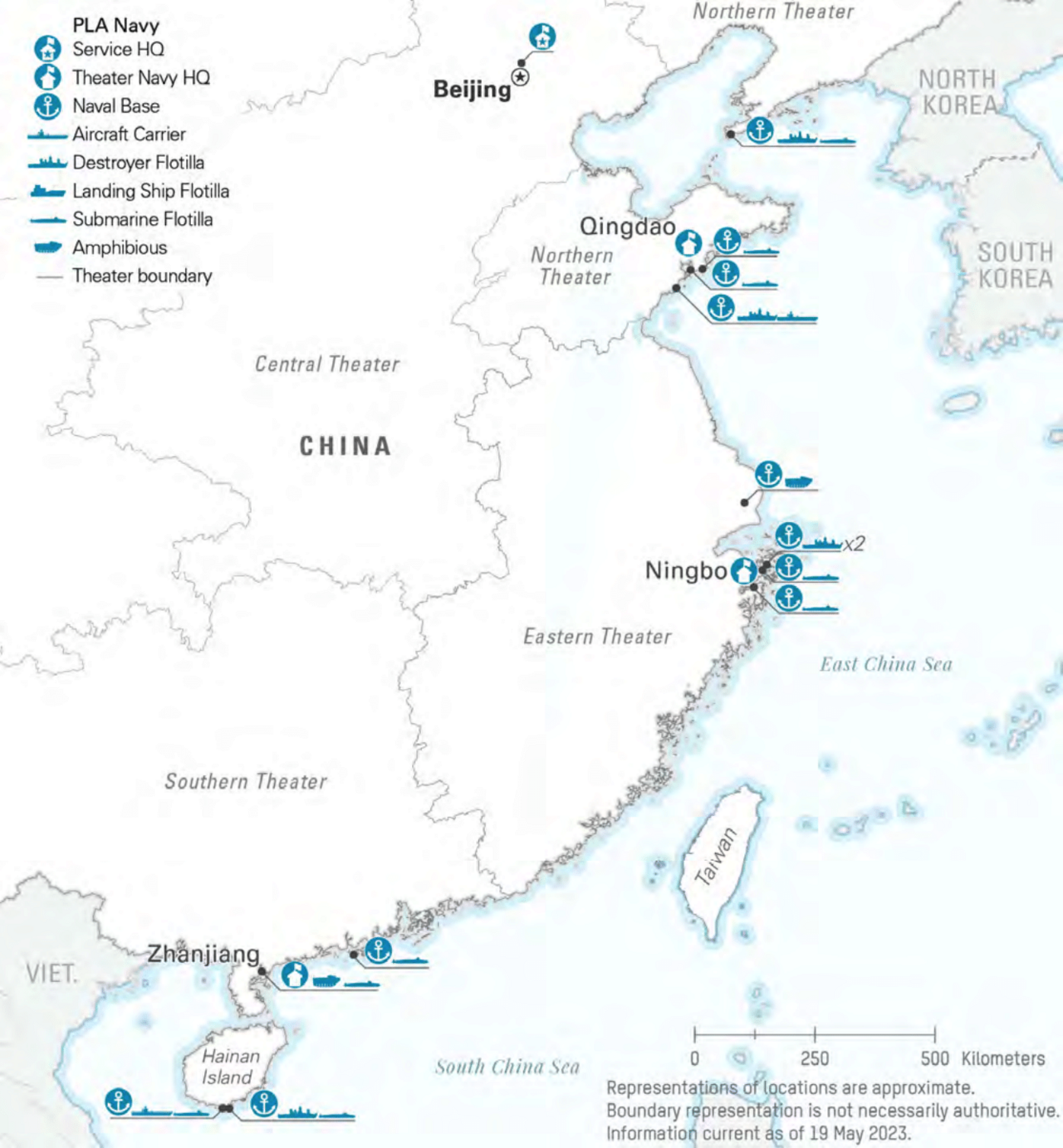 Image: Wikimedia Commons
This crisis sits at the intersection of three overlapping fault lines that have been building for years.
The first is the unresolved nuclear standoff with Iran. Despite years of negotiations — including the original JCPOA and its partial successors — no durable agreement has been reached. Iran’s uranium enrichment program has continued advancing, and American patience, across multiple administrations, has grown shorter. The threat of military action against Iranian nuclear sites has never been fully taken off the table.
The second fault line is China’s expanding naval footprint in the Indo-Pacific and its growing assertiveness in defending what it considers its core interests — energy security foremost among them. Beijing has invested heavily in the capacity to project naval power beyond its immediate coastal waters, and the Persian Gulf is increasingly within the scope of that calculation.
The third is the broader fragility of the global energy system. The post-pandemic recovery stretched supply chains. The Russia-Ukraine war disrupted European energy markets and forced a global reshuffling of oil and gas flows. The world is still absorbing those shocks. A Hormuz disruption would not hit a resilient system; it would hit one that is already under stress.
What makes this moment particularly volatile is the feedback loop between all three. Military escalation with Iran triggers energy market panic. Energy market panic increases pressure on China to act. Chinese action raises the prospect of a direct great-power confrontation. Each step amplifies the next.
What to Watch
In the coming days and weeks, several indicators will signal whether this situation is stabilizing or spiraling.
Naval movements in the Gulf of Oman and the Persian Gulf are the most immediate tell. An increase in American carrier group positioning or Iranian fast-boat activity near the strait would suggest escalation rather than de-escalation. Track US Fifth Fleet communications and regional shipping advisories from Lloyd’s Market Association.
Oil futures markets will price in risk in real time. A sustained move above $100 per barrel on Brent crude, driven by geopolitical rather than supply-demand fundamentals, would indicate that traders are taking the blockade scenario seriously.
Chinese diplomatic signaling matters enormously. Watch for statements from Beijing’s Foreign Ministry, any direct communications between Chinese and American defense officials, and whether China moves any naval assets toward the region. China has a naval logistics facility in Djibouti, just outside the strait’s western approaches — any activity there would be significant.
Finally, watch Iranian domestic politics. Hardliners in Tehran have always seen the strait as their ultimate insurance policy. If moderating voices lose internal traction, the probability of an Iranian-initiated closure — whether in response to sanctions, strikes, or perceived humiliation — increases substantially.
The Strait of Hormuz has been called the world’s most important chokepoint so many times that the phrase risks becoming numbing. But the numbers are unambiguous. Twenty percent of global oil. No viable alternative. Three nuclear-armed or nuclear-capable powers with competing interests converging on 21 miles of water. The situation deserves serious attention, not alarm — but it demands attention nonetheless.
Sources: War Monitor conflict tracking platform; US Energy Information Administration (Strait of Hormuz fact sheet); Council on Foreign Relations (Strait of Hormuz backgrounder).