Hormuz on the Brink: What a US-Iran Standoff Would Cost the World
A potential US naval blockade of the Strait of Hormuz threatens global oil markets, risks drawing in China, and could trigger the worst energy crisis in decades.
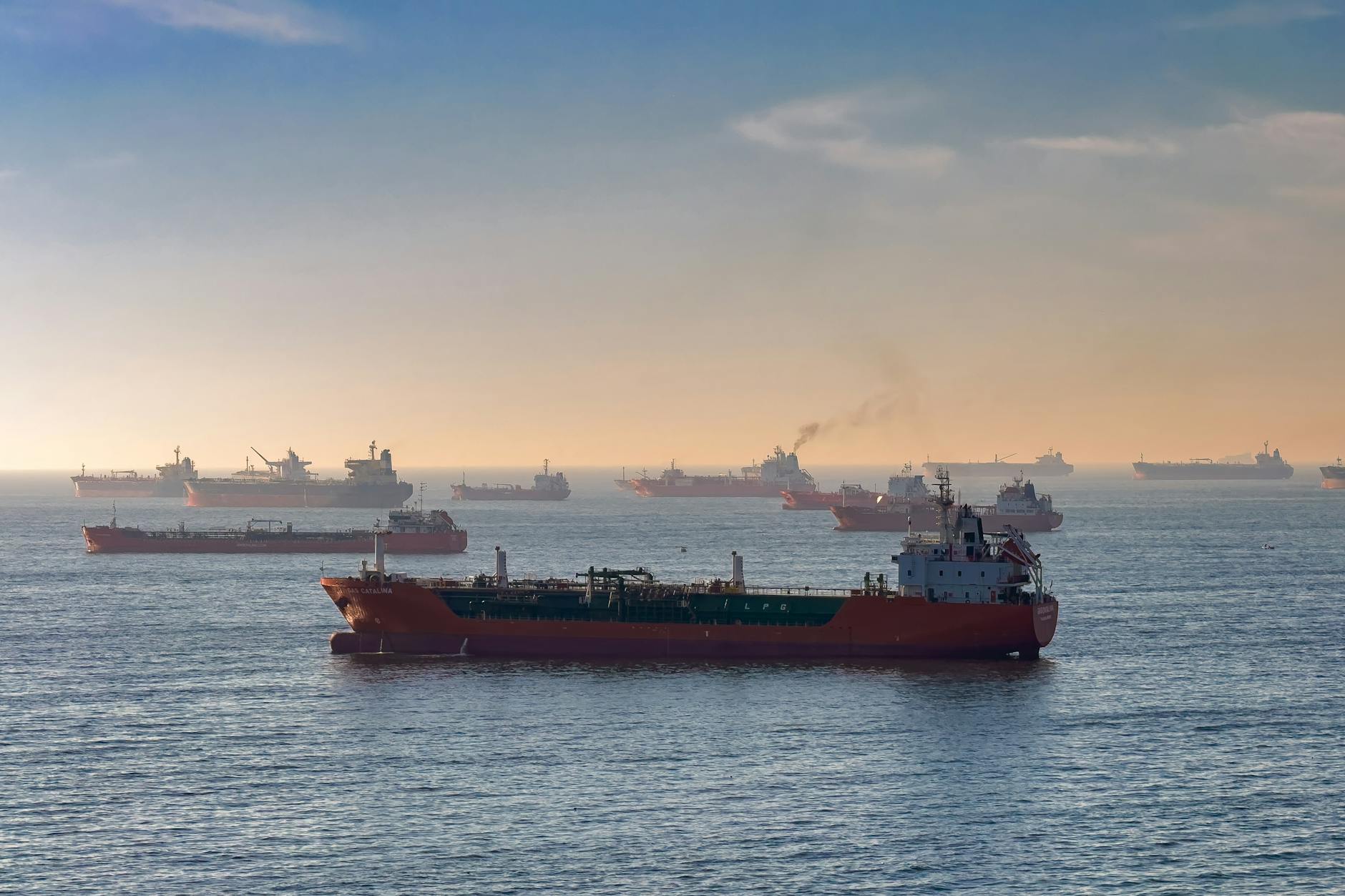
There is a narrow strip of water — just 21 miles wide at its tightest point — that quietly governs the price you pay for almost everything. The Strait of Hormuz, wedged between Iran and Oman, is the passage through which roughly 20 percent of the world’s traded oil flows every single day. For decades, analysts have called it the world’s most important chokepoint. Right now, it may be closer to becoming a flashpoint than at any point in recent memory.
What Happened
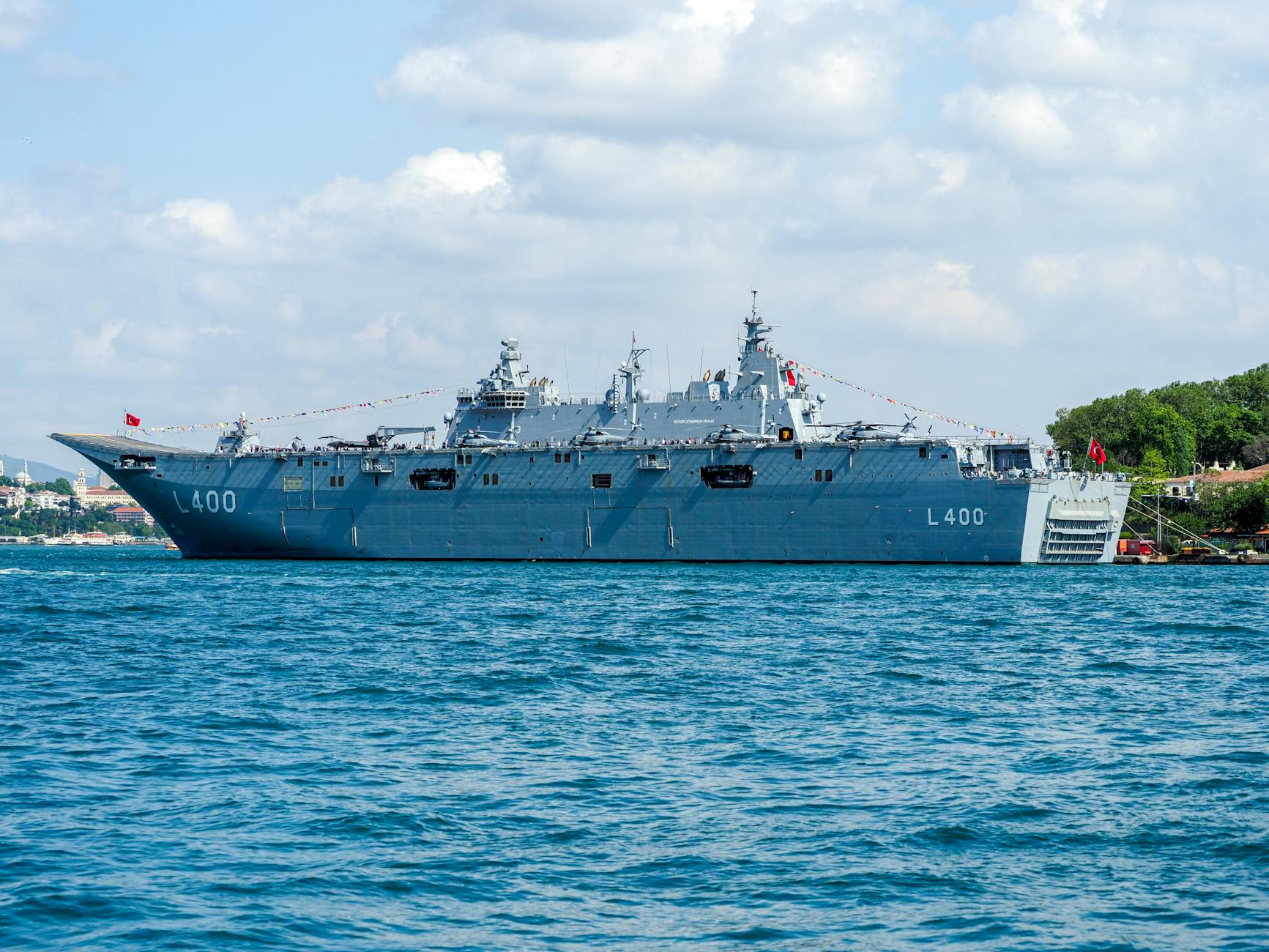 Image: Pexels/Abdurahman Yarichev
War Monitor flagged a severity-8 alert this week covering a scenario that geopolitical analysts have long feared: a potential US naval blockade of the Strait of Hormuz as part of escalating confrontation with Iran. The alert — rated near the top of the severity scale and tagged across US-China-Iran dynamics — captures a confluence of pressures that have been building for months.
The broader backdrop is familiar. Washington and Tehran have spent years cycling through nuclear negotiations, sanctions pressure, and proxy skirmishes across the Middle East. US forces and Iran-aligned groups have exchanged fire in Iraq, Syria, and the Red Sea corridor. But the current escalation reportedly involves something more direct: the question of whether the United States would use its naval supremacy to physically choke off Iranian oil exports and, in doing so, potentially halt tanker traffic for everyone transiting the strait — including American allies.
Iran, for its part, has threatened to close the Strait of Hormuz on multiple occasions stretching back decades, most memorably during periods of peak sanctions pressure in 2011-2012 and again in 2018-2019. What’s different now is the degree to which the US appears willing to consider offensive interdiction rather than purely defensive posturing — and the degree to which China’s economic exposure to the strait has grown.
Why It Matters
 Image: Pexels/Sean P. Twomey
If the Strait of Hormuz were blocked — even for a matter of days — the economic consequences would be immediate and severe. According to the US Energy Information Administration, approximately 17 million barrels of oil passed through the strait daily in recent years, along with significant volumes of liquefied natural gas from Qatar and other Gulf producers. There is no practical alternative route that could absorb that volume on short notice. The Saudi pipeline bypassing the strait, the East-West Pipeline, has a capacity of roughly 5 million barrels per day — a fraction of what flows through Hormuz.
A sustained blockade, or even the credible threat of one, would send Brent crude prices surging. Estimates from energy analysts and the International Energy Agency have historically suggested that a full closure could push prices above $150 per barrel within weeks, potentially triggering recession conditions in energy-import-dependent economies across Europe, Asia, and the developing world. Inflation, already a tender political issue in most Western democracies, would reignite.
For the United States itself, the calculus is complicated. American oil production has boomed over the past decade, making the US less directly exposed to Gulf supply disruptions than it once was. But the global oil market is integrated — a price spike in Rotterdam hits consumers in Ohio too. And the reputational and diplomatic costs of being seen to deliberately weaponize a global commons would be significant.
The Bigger Picture
The wildcard in every Hormuz scenario is China.Beijing imports approximately 40 to 50 percent of its crude oil through the Strait of Hormuz, with a substantial portion of that coming directly from Iran under arrangements that have persisted despite US sanctions. China is not a passive spectator here. It has invested heavily in Iranian energy infrastructure under the 25-year China-Iran comprehensive cooperation agreement signed in 2021, and it has made clear — through official statements and naval deployments — that it considers the security of Gulf shipping lanes a core national interest.
A US naval blockade that interrupted Chinese oil imports would force Beijing into an extraordinarily difficult position. Accepting the disruption would signal weakness and impose real economic pain. Challenging it militarily would risk direct confrontation with US forces in a theater where America maintains significant advantage but where China’s anti-ship missile capabilities have meaningfully closed the gap.
The Council on Foreign Relations and other strategic think tanks have long identified this triangular dynamic — US pressure on Iran colliding with Chinese dependency — as one of the likeliest paths to great-power conflict in the near term. What was once a theoretical framework is now live analysis.
It is also worth noting what a Hormuz crisis would do to the countries caught in the middle. Qatar, which supplies roughly 20 percent of the world’s LNG through the strait, would see its export capacity frozen. Kuwait, Iraq, and the UAE would face the same constraint. These are US partners, not adversaries — and a blockade that damages their economies would test the durability of the Gulf security architecture that Washington has spent decades building.
Iran, meanwhile, is not without cards to play. Its military doctrine for Hormuz is well-documented: a combination of naval mines, fast-attack boat swarms, anti-ship missiles, and submarine harassment designed to make the strait too dangerous for commercial traffic even without a formal closure. Reuters has reported extensively on Iranian naval exercises explicitly rehearsing these tactics. The asymmetric math is uncomfortable for US planners: closing the strait costs Iran dearly, but threatening to close it costs almost nothing and inflicts enormous uncertainty on the market.
What to Watch
The next few weeks will reveal whether this escalation follows the pattern of past US-Iran confrontations — noise, positioning, and eventual de-escalation through back-channel diplomacy — or whether something structural has changed.
Watch for several indicators. First, diplomatic signaling: are US and Iranian officials still in indirect contact through Omani or Qatari intermediaries? Past crises have been defused through exactly these channels, and their presence or absence is the clearest near-term gauge of escalation risk.
Second, watch the oil futures market. Traders price geopolitical risk faster than diplomats resolve it. A sustained move above $100 per barrel, particularly if accompanied by sharp drawdowns in Asian exchange positions, would suggest markets are treating the blockade scenario as more than rhetorical.
Third, monitor Chinese naval movements in the broader Indo-Pacific. Beijing rarely telegraphs intent directly, but repositioning of surface vessels or carrier groups in the South China Sea or Arabian Sea would be a significant signal that China is moving from observer to stakeholder in how this plays out.
Finally, watch the domestic politics on both sides. In Tehran, hardliners have historically benefited from confrontation with Washington, and any leadership that appears to capitulate under US pressure faces serious internal risk. In Washington, an administration willing to escalate to a Hormuz blockade is making a bet that the economic pain — globally and domestically — is politically manageable. That bet has been wrong before.
The Strait of Hormuz has been a crisis waiting to happen for most of living memory. Whether the current escalation becomes the one that actually closes it, or the one that finally produces a durable framework for managing it, may be the most consequential geopolitical question of the coming months.
Sources: War Monitor (severity-8 alert, April 13, 2026); U.S. Energy Information Administration (Hormuz traffic data); Council on Foreign Relations (great-power risk analysis); Reuters (Iranian naval doctrine reporting).