CDC Pauses Pathogen Testing, State Labs Move to Fill the Gap
The CDC has paused testing for rabies, mpox, and other pathogens amid an internal review, prompting state public health labs to expand their capacity.

Overview
A quiet but consequential shift is underway in the United States’ disease surveillance infrastructure. The Centers for Disease Control and Prevention (CDC) has temporarily suspended laboratory testing for a range of pathogens — including rabies and mpox — while the agency conducts an internal review of its testing efficacy. In response, state public health laboratories across the country have begun expanding their own testing capabilities to compensate, attempting to prevent the pause from creating meaningful blind spots in national disease monitoring.
The move has drawn attention from epidemiologists and public health professionals who warn that even short interruptions in centralized pathogen testing can have downstream consequences — delaying diagnoses, slowing outbreak detection, and complicating case count reporting that underpins national and international health decisions. While state labs have historically played a supporting role to federal infrastructure, this situation places them in an unexpectedly prominent position.
Current Situation
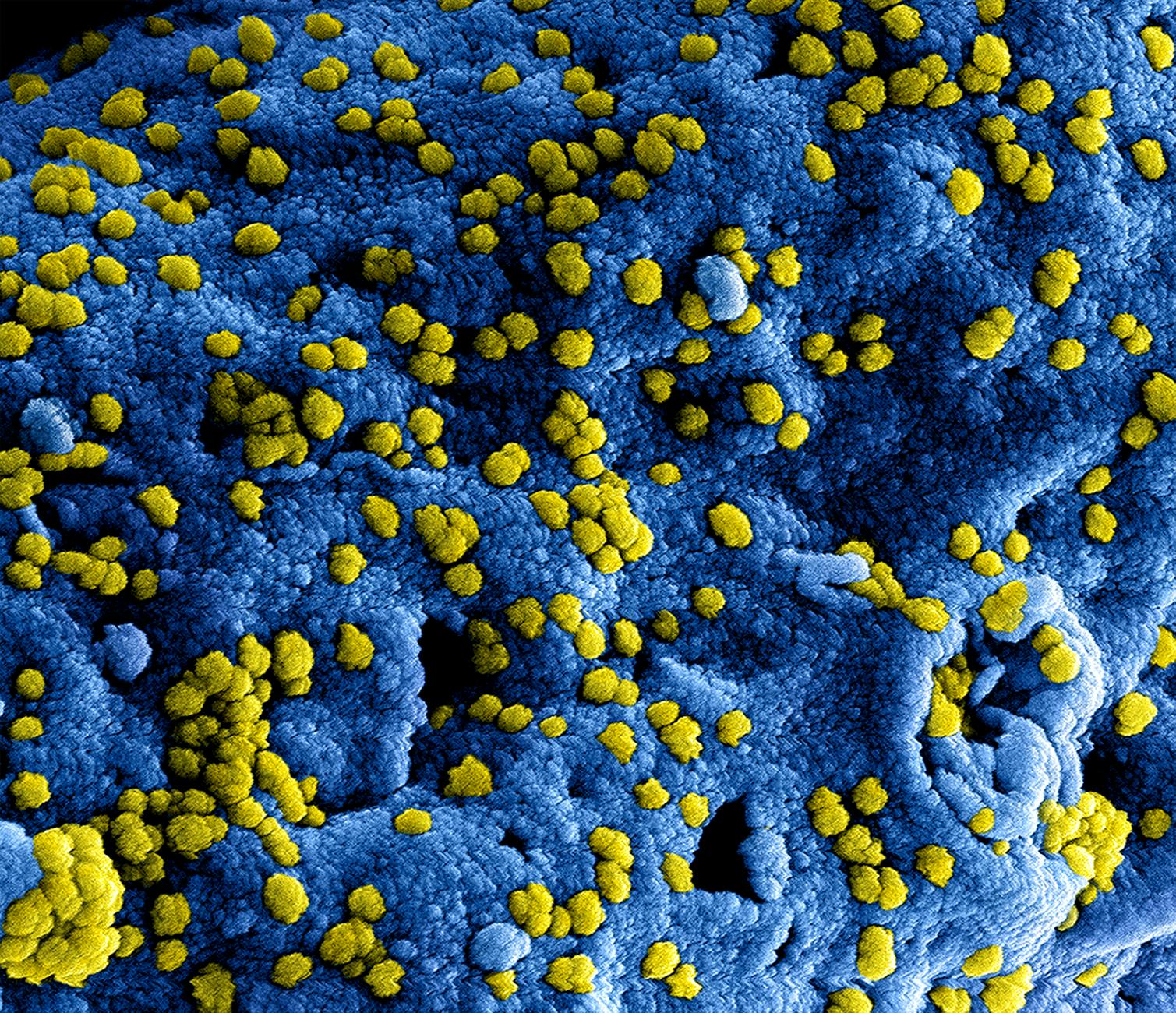 Image: Pexels/CDC
According to reporting by the Center for Infectious Disease Research and Policy (CIDRAP), the CDC’s pause took effect as part of an ongoing internal review of how the agency evaluates and validates its testing processes. The review is described as procedural in nature, but its scope — touching pathogens as different as rabies, a near-universally fatal viral encephalitis, and mpox, a viral disease that caused a global outbreak in 2022 and remains an active public health concern — has raised questions about the breadth of the suspension.
The CDC has not published precise timelines for when testing services will resume for each affected pathogen, and it remains unclear exactly how many test categories are involved. CIDRAP’s reporting indicates the pause “could affect disease surveillance,” language that reflects cautious but genuine concern from the public health community.
For context, mpox — caused by the monkeypox virus, a member of the Orthopoxvirus genus — continues to circulate globally. A more severe variant, Clade I, has been driving outbreaks in parts of central and eastern Africa, and the World Health Organization (WHO) declared mpox a Public Health Emergency of International Concern (PHEIC) in August 2024, a designation that remains in effect. Any reduction in domestic U.S. testing capacity for mpox, even temporary, comes at a sensitive moment in the global response.
Rabies, meanwhile, is an almost invariably fatal disease once symptoms appear, making rapid laboratory confirmation critical for post-exposure prophylaxis decisions. Delays in testing can directly affect clinical outcomes.
Affected Regions
The immediate geographic footprint of this development is domestic — centered on the interplay between federal CDC laboratories and the network of state and territorial public health laboratories that operate under the Association of Public Health Laboratories (APHL) framework. However, the implications extend beyond U.S. borders.
The United States serves as a reference testing hub for several pathogens, and the CDC maintains collaborative diagnostic relationships with international partners and WHO regional offices. A reduction in CDC testing capacity — even temporary — can affect the reliability of data flowing into global surveillance systems.
Within the U.S., the burden of interim coverage is not falling evenly. Larger state laboratory systems in states like California, New York, and Texas have greater existing capacity to absorb additional testing volume. Smaller or less-resourced state labs may face more significant challenges in scaling up quickly, potentially creating geographic disparities in diagnostic turnaround times across the country.
The CIDRAP report notes that state public health labs are “stepping up,” but does not detail which pathogens individual states are now testing for, or whether all affected test categories have been redistributed to state-level coverage. That ambiguity is part of what makes the situation difficult to assess from a surveillance standpoint.
Risk Assessment
 Image: Pexels/Helena Jankovičová Kováčová
The immediate public health risk posed by this testing pause is not the pathogens themselves — mpox and rabies have not changed in their transmission dynamics or lethality — but rather the potential for surveillance gaps that can allow outbreaks to progress undetected or underreported.
In epidemiology, the quality of outbreak response is tightly coupled to the quality of surveillance data. Testing delays extend the window between exposure and diagnosis, complicate contact tracing, and can cause case counts to lag behind actual transmission. For a disease like mpox, where isolation of confirmed cases is a key containment tool, diagnostic delay is not merely an administrative inconvenience — it is a transmission risk.
The most critical public health concern is not a surge in cases, but the reduced visibility into whether a surge is occurring at all.For rabies, the stakes are more immediately clinical. Post-exposure prophylaxis — the vaccine and immunoglobulin regimen given to people after potential rabies exposure — is highly effective but time-sensitive. Laboratory confirmation of rabies in an animal or suspected human case guides treatment decisions. Any delay in that confirmation, particularly in jurisdictions where state labs are not yet fully equipped to process rabies specimens, introduces risk at the individual patient level.
Populations most affected by these surveillance gaps include rural communities with limited access to state laboratory services, healthcare providers managing potential rabies exposures without rapid diagnostic support, and immunocompromised individuals who face elevated risk from mpox.
The WHO’s current risk assessment for global mpox remains elevated due to the ongoing Clade I situation in Africa, which makes the integrity of U.S. surveillance infrastructure — as both a domestic safeguard and a global data contributor — particularly important at this moment.
Prevention & Response
State public health laboratories have mobilized quickly. According to CIDRAP, labs across the country have begun absorbing testing workloads that would normally be routed to the CDC, a coordination effort that reflects both the resilience of the U.S. public health laboratory network and the urgency with which the gap is being treated.
The Association of Public Health Laboratories and state health departments are understood to be in active communication about test redistribution. In some cases, state labs are developing or validating their own testing protocols for pathogens previously handled exclusively at the federal level — a process that requires regulatory compliance as well as technical capacity.
For individuals, the practical guidance from public health authorities has not changed. Those with potential rabies exposures — from bites or scratches by wild or unvaccinated animals — should seek immediate medical attention and report the incident to local health authorities regardless of laboratory processing timelines. Post-exposure prophylaxis decisions can be initiated on clinical and epidemiological grounds without waiting for laboratory confirmation.
For mpox, prevention recommendations remain consistent with prior guidance: awareness of transmission routes (primarily close physical contact with an infected person or contaminated materials), recognition of symptom patterns (fever, lymphadenopathy, and a characteristic rash), and vaccination for eligible higher-risk individuals using the licensed JYNNEOS vaccine, where available.
Healthcare providers are advised to contact their state health department directly to understand current testing pathways and turnaround expectations for both rabies and mpox specimens. The landscape is evolving as state labs scale their capacity, and routing guidance may differ by jurisdiction.
The CDC has not indicated the review will result in permanent changes to its testing portfolio, and the agency is expected to restore suspended services once the internal review concludes. However, no specific timeline has been made public, and public health professionals will be watching closely for any evidence that the pause is producing measurable gaps in case detection.
Sources
- CIDRAP (Center for Infectious Disease Research and Policy) — “State public health labs step up as CDC pauses testing for various pathogens, including rabies, mpox.” Published April 3, 2026. https://www.cidrap.umn.edu/rabies/state-public-health-labs-step-cdc-pauses-testing-various-pathogens-including-rabies-mpox